Push Ups For The ADF/Police
Although push ups are no longer a requirement for Navy & Air Force pre-entry fitness assessments (see know your fitness standards), they are still something that EVERYONE should be working on.
Being able to perform a good amount of push ups indicates a good amount of upper body strength and muscular endurance which is critical to have as a tactical athlete.
Navy and Air Force no longer require you to be able to perform a push up before you enlist but this does not mean you are not required to do them once you are enlisted.
If you are able to create a solid baseline of upper body strength and muscular endurance which is displayed by the amount of push ups you can perform then you will not only be able to pass your fitness tests at basic training but you will find that this additional upper body strength will help with a multitude of tasks including obstacle courses, hand-hand combat, fire and movement, body drags and even holding a rifle at your shoulder.
Below is an in-depth video about how to conduct a technically efficient push up to the standards of the Australian Defence Force
Training For Push Ups
It's very clear that a lot of people just don't have the knowledge about what needs to be trained to improve push ups. So here's some basic info to help steer you in the right direction. Once you can do 60+ reps in a row than the approach/methods start to change.
Exercise Selection
To improve your push up strength you need to improve your upper body strength specific to the "push" movement pattern which is essentially any movement that involves you pushing something away from your body using your upper body. A strong back and core are also very important elements to help with this movement indirectly.
When creating your workout choose 1-2 compound main lifts that train the push pattern.
Example exercises:
▪️Push Up Variations
▪️Bench Press Variations
▪️Dip Variations
▪️Shoulder Press Variations
Frequency
The best place to start is to include 2-3 push up focused strength workouts per week.
Volume/Intensity
The reason you cannot do a push up/struggle with them right now is because you lack the STRENGTH not endurance. So to build strength you MUST lift heavy things to stimulate the nervous system and muscles correctly. Strength work in circuit form like F45 and CrossFit metcons etc WILL NOT build your strength.
Instead use simple sets and reps that you build the weight each time you repeat the workout. Start by performing 3-5 sets of 5 reps each set with a 2-3 minute (yes a 2-3min!) rest between sets. You can do other things during your rest that won't interfere such as exercises for you back, legs or even light cardio.
You don't need to go to failure each set but you need to push the limits so that you are only leaving 1-2 reps left in the tank each set. The long rests should allow you to use the same weight across all sets.
Accessory Work
After your main lifts choose a couple of exercises working the same muscles and perform some higher rep sets. Don't go crazy if you a hitting 3 sessions per week.
Example exercises:
▪️Regressed Push Up Variations
▪️Lighter weights on push pattern variations
▪️Pec Fly Variations
▪️Tricep Extension Variations
▪️Front Delt Raises
Progression
Repeat the workouts for 4-6 weeks with the focus to build the weight and BE AWARE this will not "feel" like you do after you complete an endurance circuit like F45. You will not feel completely exhausted because it is not training your energy systems, it is training your STRENGTH which feels a lot different.
If you consistently target and progress the correct movement pattern with proper strength training and include extra upper back and core training I can 100% guarantee you will improve quickly.
🚀 Bonus
If you're just starting out and struggling to do a single push-up on the ground, this recorded workshop video is exactly what you need. It’s designed to help you achieve your first push-up, with no equipment required, and you can do it anywhere. Check it out below.
Pre-entry Fitness Targets
Over my 16 year career in the full-time Army I never even knew what the pass mark was for my age and gender. This was because I knew I could pass and the only thing I was focused on was how many I could do!
This is the attitude I want all of you to take on. Always strive to be better!
My official highest push up score was 105 reps in 2 minutes (below is a video of 91) but I have seen many people do a lot more.
You don't have to be the best as long as you continue to improve and don't settle for good enough. Continue to push your limits and find out what you are capable of.
Here are some suggested targets that will have you sitting in a better position than 90% of other recruits and will set you up for success for active service fitness testing.
🎯 2min Push up Test (Army)
Males = 50+
Females = 30+
🎯 Cadence Push Up Test (Navy/Air Force/SF)
Males = 35+
Females = 20+
Special Forces = 60+
7 Day Beginner Push Up Program
To help you get started I would like to gift you a 7 day beginner push up program that you can download for free. These workouts can be repeated for 4-6 weeks with the goal to progress the workouts as much as possible.
Learn more about push up training here:
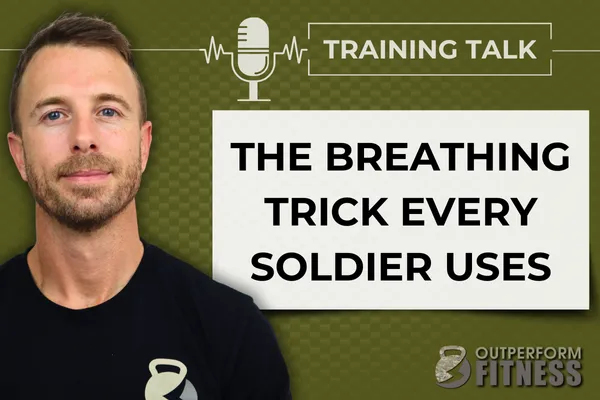
Tactical Breathing: How to Reset Stress and Boost Performance in Training and Service
Tactical Breathing: A Practical Guide to Lower Stress and Improve Performance
When stress kicks in — whether you’re under the pump in training, on exercise, or just dealing with day-to-day pressure — your body flips into fight-or-flight mode. Heart rate spikes, breathing gets shallow, and decision-making suffers.
That’s where tactical breathing, also known as box breathing, comes in. It’s a simple, repeatable tool you can use anytime to reset your nervous system, conserve energy, and regain control.
What Is Tactical Breathing?
Think of a box. Each side represents a four-second phase of your breath:
Breathe in for 4 seconds
Hold for 4 seconds
Breathe out for 4 seconds
Hold for 4 seconds
That’s one full cycle. Repeat this box pattern for a few minutes, and you’ll notice your body and mind settling down.
Why Use It?
When you’re stressed, your sympathetic nervous system (fight-or-flight) takes over. This state is useful if you need to react fast, but staying in it burns through energy, increases fatigue, and wrecks decision-making.
Tactical breathing pulls you back into your parasympathetic state (rest-and-recover), helping you:
Lower stress levels
Make clearer decisions
Conserve energy
Control fine motor skills (e.g. holding a weapon steady, handling equipment)
Kickstart recovery after training
Benefits for Training and Operations
Performance under pressure: Helps steady your breathing and focus when you need precision — like shooting or handling kit.
Faster recovery: After a workout, a contact drill, or field phase, it shifts your body out of fight-or-flight so you recover sooner.
Energy conservation: Stops you from burning unnecessary energy when the situation has already calmed.
Clarity and control: Reduces “panic mode” so you can think and act deliberately.
⚠️ Important Tip
Tactical breathing is a reset tool, not something to use while you’re still under heavy physical exertion.
Don’t try to box breathe mid-run, mid-march, or while carrying a heavy pack — holding your breath under exertion will only make you fatigue faster.
Use it:
Before precision tasks (like firing or weapon handling)
After stressful drills or PT
During recovery phases when you can pause and reset
ADF-Specific Scenarios
Here’s where tactical breathing really makes a difference in service life:
On the range: After a sprint to the firing line, your heart rate and breathing are spiking. Two cycles of box breathing can settle your weapon, steady your sight picture, and improve shot placement.
After a contact drill: Fire and movement drills jack your nervous system up. Once the “fight” is over, tactical breathing brings you back down so you’re not wasting energy staying hyper-alert.
During weapon handling or technical tasks: Stripping a weapon, reloading under pressure, or working on equipment requires fine motor control. Taking a few cycles beforehand helps you steady up and avoid clumsy mistakes.
At Kapooka or Initial Training: Instructors deliberately create stress. Box breathing between evolutions (when you get the chance to pause) can keep your head clear so you don’t rush, fumble, or forget simple drills.
Post-PT or field exercise: Using tactical breathing straight after training helps kickstart recovery instead of staying stuck in fight-or-flight all day.
Everyday Applications
Tactical breathing isn’t just for the Army or tactical environments. It’s just as effective in daily life:
After a hard training session, to recover faster
During stressful work situations or study blocks
At home when things get heated with kids or family
First thing in the morning to reset before the day begins
On the road, to calm down and avoid “road rage mode”
How To Practise Tactical Breathing
Find a quiet spot — sit or lie down.
Set a timer — start with 1–3 minutes.
Follow the box pattern:
4 seconds in → 4 seconds hold → 4 seconds out → 4 seconds hold.
Repeat for 3–5 minutes, or longer if you like.
Track your progress — monitor your heart rate before and after. You should see it drop closer to your resting rate.
Tip: Guided apps and timers can help at first, but you’ll quickly get the rhythm without them.
Putting It Into Your Routine
After training: Spend 2–3 minutes lying on your back before leaving the gym. This will kickstart recovery instead of staying stuck in fight-or-flight.
On the job: Use it after a contact drill, patrol, or stressful exercise to reset quickly.
At home: Step away and use box breathing before reacting in a stressful moment.
Morning reset: Start the day with a few cycles before checking your phone.
Final Thoughts
Tactical breathing is a simple but powerful tool. Whether you’re preparing for Kapooka, serving in the ADF, or just looking to handle stress better in daily life, this method helps you control your state and perform at your best.
👉 For the full breakdown, check out the Tactical Breathing YouTube video.
👉 If you’re working on physical prep, read: Push-Up Progress Isn’t About Reps — It’s About Strength.
👉 Heading to Kapooka soon? Don’t miss: How to Train in the Final 2 Weeks Before Kapooka.


© OUTPERFORM FITNESS All Rights Reserved 2020