Push Ups For The ADF/Police
Although push ups are no longer a requirement for Navy & Air Force pre-entry fitness assessments (see know your fitness standards), they are still something that EVERYONE should be working on.
Being able to perform a good amount of push ups indicates a good amount of upper body strength and muscular endurance which is critical to have as a tactical athlete.
Navy and Air Force no longer require you to be able to perform a push up before you enlist but this does not mean you are not required to do them once you are enlisted.
If you are able to create a solid baseline of upper body strength and muscular endurance which is displayed by the amount of push ups you can perform then you will not only be able to pass your fitness tests at basic training but you will find that this additional upper body strength will help with a multitude of tasks including obstacle courses, hand-hand combat, fire and movement, body drags and even holding a rifle at your shoulder.
Below is an in-depth video about how to conduct a technically efficient push up to the standards of the Australian Defence Force
Training For Push Ups
It's very clear that a lot of people just don't have the knowledge about what needs to be trained to improve push ups. So here's some basic info to help steer you in the right direction. Once you can do 60+ reps in a row than the approach/methods start to change.
Exercise Selection
To improve your push up strength you need to improve your upper body strength specific to the "push" movement pattern which is essentially any movement that involves you pushing something away from your body using your upper body. A strong back and core are also very important elements to help with this movement indirectly.
When creating your workout choose 1-2 compound main lifts that train the push pattern.
Example exercises:
▪️Push Up Variations
▪️Bench Press Variations
▪️Dip Variations
▪️Shoulder Press Variations
Frequency
The best place to start is to include 2-3 push up focused strength workouts per week.
Volume/Intensity
The reason you cannot do a push up/struggle with them right now is because you lack the STRENGTH not endurance. So to build strength you MUST lift heavy things to stimulate the nervous system and muscles correctly. Strength work in circuit form like F45 and CrossFit metcons etc WILL NOT build your strength.
Instead use simple sets and reps that you build the weight each time you repeat the workout. Start by performing 3-5 sets of 5 reps each set with a 2-3 minute (yes a 2-3min!) rest between sets. You can do other things during your rest that won't interfere such as exercises for you back, legs or even light cardio.
You don't need to go to failure each set but you need to push the limits so that you are only leaving 1-2 reps left in the tank each set. The long rests should allow you to use the same weight across all sets.
Accessory Work
After your main lifts choose a couple of exercises working the same muscles and perform some higher rep sets. Don't go crazy if you a hitting 3 sessions per week.
Example exercises:
▪️Regressed Push Up Variations
▪️Lighter weights on push pattern variations
▪️Pec Fly Variations
▪️Tricep Extension Variations
▪️Front Delt Raises
Progression
Repeat the workouts for 4-6 weeks with the focus to build the weight and BE AWARE this will not "feel" like you do after you complete an endurance circuit like F45. You will not feel completely exhausted because it is not training your energy systems, it is training your STRENGTH which feels a lot different.
If you consistently target and progress the correct movement pattern with proper strength training and include extra upper back and core training I can 100% guarantee you will improve quickly.
🚀 Bonus
If you're just starting out and struggling to do a single push-up on the ground, this recorded workshop video is exactly what you need. It’s designed to help you achieve your first push-up, with no equipment required, and you can do it anywhere. Check it out below.
Pre-entry Fitness Targets
Over my 16 year career in the full-time Army I never even knew what the pass mark was for my age and gender. This was because I knew I could pass and the only thing I was focused on was how many I could do!
This is the attitude I want all of you to take on. Always strive to be better!
My official highest push up score was 105 reps in 2 minutes (below is a video of 91) but I have seen many people do a lot more.
You don't have to be the best as long as you continue to improve and don't settle for good enough. Continue to push your limits and find out what you are capable of.
Here are some suggested targets that will have you sitting in a better position than 90% of other recruits and will set you up for success for active service fitness testing.
🎯 2min Push up Test (Army)
Males = 50+
Females = 30+
🎯 Cadence Push Up Test (Navy/Air Force/SF)
Males = 35+
Females = 20+
Special Forces = 60+
7 Day Beginner Push Up Program
To help you get started I would like to gift you a 7 day beginner push up program that you can download for free. These workouts can be repeated for 4-6 weeks with the goal to progress the workouts as much as possible.
Learn more about push up training here:
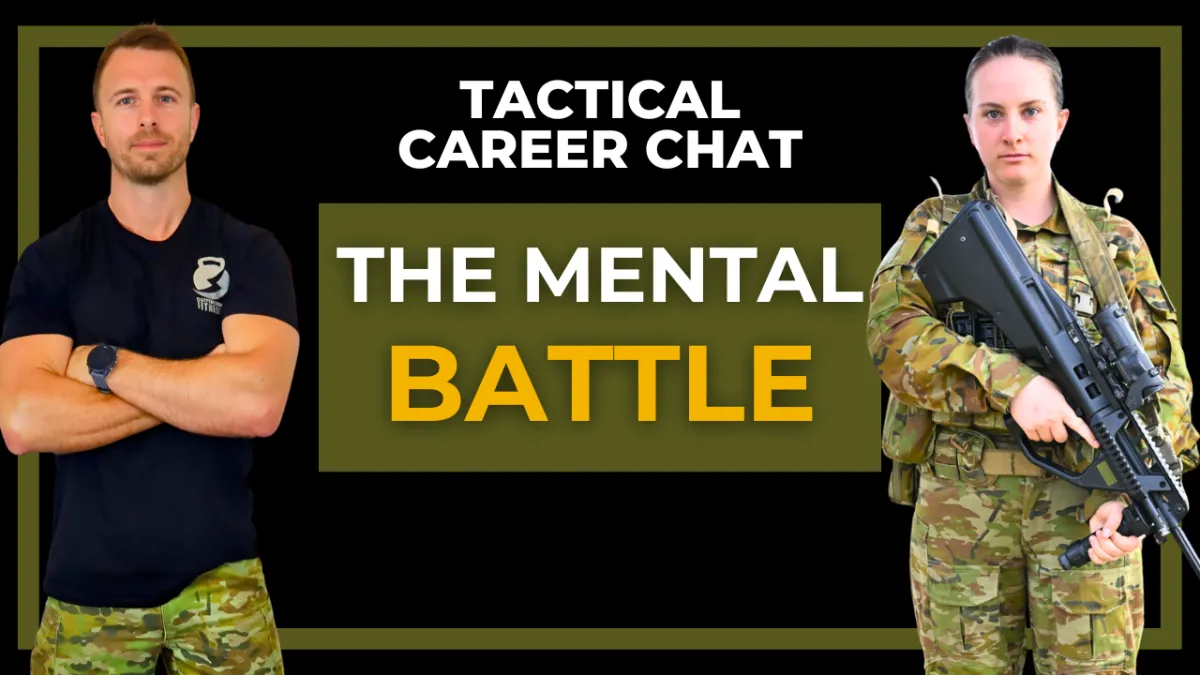
Simone’s Journey to Kapooka: How the Beep Test Delayed Her Training
The Roadblock That Delayed Simone’s Trip to Kapooka
Preparing for the ADF fitness test is one of the biggest hurdles for many applicants. The beep test in particular often becomes the deciding factor between progressing to Kapooka or being delayed. In this article, we look at Simone’s journey into the Army Reserves, how the beep test delayed her trip to Kapooka, and the lessons other ADF applicants can learn from her experience.
Her story is a good reminder that passing the entry fitness test once isn’t the finish line. You still need to improve that standard while waiting to start training.
From Application to Enlistment
Simone first applied to join the Army in January 2023 and officially enlisted in May that year.
Signing the paperwork was a huge moment, but it also came with nerves.
She openly admitted she had never really been very fit and had never been much of a runner before applying.
So when it came to preparing for the fitness test, she focused on the one thing she knew she needed to pass.
The beep test.
She would head down to the oval and run the beep test repeatedly, then follow it up with push-ups and sit-ups.
That effort helped her get through the enlistment process.
But maintaining that standard later on proved to be more difficult.
When the Beep Test Became a Roadblock
After enlisting, Simone was scheduled to head to Kapooka later that year.
But the beep test soon became a sticking point.
The training that had helped her enlist wasn’t holding up when it came time to progress to training, which meant she couldn’t head to Kapooka as planned.
That’s where the delay started.
Between study commitments at university, family responsibilities, and job situations that required her to stay in a role for a certain period, things kept getting pushed back.
Before long, what should have been a short delay turned into a much longer journey.
In total, Simone spent over two years working toward finally getting to Kapooka.
Changing the Way She Trained
One of the biggest shifts came when Simone changed how she approached her training.
Early on, she was putting in plenty of effort but didn’t really have a clear structure guiding what she should be doing.
Once that changed, the difference was noticeable.
She mentioned that she had spent around two years trying to improve on her own, but once her training became more structured through our Fit For Service Training Plan she saw improvements within just a few months.
That shift helped her finally move past the roadblock that had been holding things up.
Finally Arriving at Kapooka
After sticking with it through the delays, Simone eventually made it to Kapooka.
Like most recruits, the first week was a shock to the system.
She described the adjustment of suddenly living in close quarters with other people, constantly being under pressure, and getting used to the intensity of recruit training.
Even something as simple as the morning routine felt stressful in those first few days, especially when you’re lying there waiting for the lights to flick on and the day to begin.
But once she settled into the rhythm of training, things started to become more manageable.
And after the long wait to get there, pushing through those early challenges was worth it.
Lessons From Simone’s Journey
Simone’s experience highlights a few practical things for anyone preparing to join the ADF.
Passing the fitness test once isn’t the finish line
You still need to maintain / improve that standard while waiting to start training.
Effort alone isn’t always enough
Simone was training consistently early on, but without a clear plan it was harder to progress.
The right structure can change things quickly
After years of trying to improve on her own, structured training helped her make noticeable progress within months.
If the Beep Test Is Your Roadblock
For a lot of applicants, the beep test is the thing that holds them back.
If you want to learn how to train for it properly, I’ve put together a guide explaining the key strategies to improve your score.
You can check it out here:
Beep Test Training Guide
https://info.outperformfitness.com.au/beeptest
During the chat with Simone, she also speaks a lot of and mindset strategy called "segmentation". You can learn how to apply it to your beep test here:
https://www.outperformfitness.com.au/blogs/c/mindset/b/beep-test-mindset-hacks
Preparing Properly for Kapooka
Passing the entry fitness test is just the start.
You still have recruit training and your career ahead of you.
If you want a structured training system built specifically for ADF applicants, you can learn more about the Fit For Service Training Plan here:
https://info.outperformfitness.com.au/getbattleready
Simone’s journey shows that delays can happen during the enlistment process.
But with persistence and the right approach to training, those roadblocks don’t have to stop you from eventually getting there. You can watch the full career chat here:
FAQ
What beep test score is required for the ADF?
The minimum score varies depending on role and entry pathway, but applicants should aim to be comfortably above the minimum before arriving at Kapooka. You can find your specific standards here http://info.outperformfitness.com.au/knowthestandards
How long does it take to improve your beep test score?
With structured training, many applicants see improvements within a few months depending on their starting fitness level.
Should you train by repeating the beep test?
Practising the test can help with familiarity, but long term improvement comes from improving overall running fitness and conditioning.


© OUTPERFORM FITNESS All Rights Reserved 2020